⚠️Visitors to our site are often searching for information because they, their friend, or a family member has unfortunately fallen into use of dangerous substances. If you or a loved one is struggling with crack cocaine, please call us for help, we can verify if your insurance qualifies for medically assisted care.⚠️
Don’t hesitate to call our admissions department at (855) 855-9593 or click the button below to get substance abuse help for yourself or a loved one.
Introduction
Crack cocaine is one of the most potent and highly addictive stimulants on the streets today—a substance that hijacks the brain’s reward system with such ferocity that a single use can set the stage for a lifetime of struggle. At Golden Road Recovery, we understand that recognizing the need for crack cocaine rehab isn’t an admission of defeat; it’s the bravest step toward reclaiming the life addiction has stolen from you. Whether you’re seeking help for yourself or someone you love, our comprehensive treatment programs provide the medical expertise, therapeutic support, and compassionate care needed to overcome this powerful addiction and build a foundation for lasting recovery.
Signs of Crack Use
Crack cocaine is a powerful stimulant, and those struggling with addiction often exhibit particular signs that can help you determine whether intervention is needed. The signs manifest both physically and behaviorally, creating a pattern that becomes increasingly difficult to hide as the addiction progresses.
Some signs of crack use include:
- Sudden erratic or aggressive behavior – Mood swings that shift from euphoria to hostility without warning
- Intense exhaustion – Crash periods following binges where sleep becomes unavoidable
- Dilated pupils – Eyes that appear abnormally wide, even in bright light
- Burn marks on lips or fingers – Physical evidence from handling hot pipes
- Tooth decay or bleeding gums – Rapid dental deterioration, sometimes called “crack mouth”
- Dramatic weight loss – Appetite suppression leading to malnourishment
- Changes in eating habits or appetite – Extended periods without food followed by sudden hunger
- Paranoia and anxiety – Excessive suspicion, nervousness, and irrational fears
- Overdose or withdrawal symptoms – Physical and psychological distress when using or abstaining
Individuals addicted to crack may also possess drug paraphernalia—narrow glass pipes, small bags of white crystals, lighters, or steel wool. Crack cocaine looks like tiny off-white or yellowish crystals, distinctly different from powdered cocaine. People on crack often exhibit financial problems, legal troubles, and deteriorating relationships as the addiction consumes increasing amounts of time, money, and emotional energy.

What Is Crack Cocaine Withdrawal?
Crack cocaine withdrawal, while not typically life-threatening like alcohol or benzodiazepine withdrawal, is psychologically brutal. The withdrawal occurs because the brain has become dependent on crack to regulate mood, pleasure, and energy levels. When the drug is removed, the brain essentially goes through a recalibration period—relearning how to produce and process dopamine and other neurotransmitters naturally. [2]
Unlike opioids or alcohol, crack cocaine withdrawal doesn’t involve dangerous physical symptoms like seizures or respiratory depression. However, the psychological intensity can be equally devastating. The profound depression, crushing fatigue, and overwhelming cravings that characterize crack withdrawal create a mental health crisis that requires professional support. Without proper treatment at a cocaine rehab center, the psychological anguish often proves too intense to endure, leading to relapse.
Short and Long-Term Effects of Crack Use
Crack cocaine use can quickly lead to crack cocaine addiction and cause serious health problems even with only short-term abuse. The drug’s potency and rapid absorption into the bloodstream create both immediate dangers and devastating long-term consequences that affect virtually every system in the body.
Short-Term Effects of Crack Use
As a result of crack cocaine’s potency and how quickly it enters the bloodstream, short-term side effects can be intense and appear within seconds of use. The immediate rush floods the brain with dopamine, creating euphoria so powerful that the brain essentially rewires itself to chase that sensation again and again. [1]
The short-term effects of crack abuse can include:
- Dilated pupils – Eyes become extremely wide as the nervous system goes into overdrive
- Increased heart rate – Heartbeat can reach dangerous speeds, sometimes exceeding 150 beats per minute
- High blood pressure – Blood vessels constrict, creating cardiovascular strain
- Elevated body temperature – Internal temperature rises, sometimes causing overheating
- Sweating – Profuse perspiration even in cool environments
- Sudden aggression or energy bursts – Hyperactivity followed by extreme fatigue
- Hyperstimulation – Restlessness, inability to sit still, rapid speech
- Hallucinations – Visual or auditory distortions of reality
- Mood swings – Rapid shifts between euphoria, irritability, and depression
- Changes in appetite – Typically severe appetite suppression
- Anxiety and paranoia – Intense nervousness and irrational fears
- Heart attack – Cardiac events can occur even in first-time users
- Stroke – Blood vessel constriction can trigger brain hemorrhages
- Seizures – Neurological overload causing convulsions
- Overdose – Dangerously high doses leading to life-threatening complications
Short-term use of crack cocaine can rapidly lead to developing substance use disorder due to crack’s extraordinarily addictive nature. The high typically lasts only 5-10 minutes, creating a compulsive pattern where crack addicts use repeatedly in short succession—sometimes dozens of times in a single day. Notably, overdose is common due to how quickly crack cocaine enters the bloodstream and the difficulty in judging safe doses. [2]
Long-Term Effects of Crack Use
Over time, crack use causes lasting damage to the body’s cardiovascular, respiratory, and neurological systems. With long-term crack abuse, users dramatically increase their risk for heart attack, stroke, and permanent organ damage. The psychological toll is equally severe, with many experiencing cognitive decline and persistent mental health disorders. [3]
Additional long-term effects of using crack can include:
- Severe cardiovascular damage – Weakened heart muscle, irregular rhythms, and increased heart attack risk
- Respiratory problems – “Crack lung” syndrome, chronic cough, and breathing difficulties
- Stroke – Increased risk due to damaged blood vessels and elevated blood pressure
- Extreme agitation – Persistent restlessness and inability to relax
- Psychosis – Paranoid delusions, hallucinations, and detachment from reality
- Cognitive impairment – Memory problems, difficulty concentrating, poor decision-making
- Severe dental decay – “Crack mouth” characterized by extensive tooth loss and gum disease
- Malnutrition – Chronic appetite suppression leading to vitamin deficiencies
- Sexual dysfunction – Reduced libido and performance issues
- Kidney and liver damage – Organ deterioration from processing toxins
- Infectious diseases – Increased susceptibility to HIV, hepatitis, and other infections
- Movement disorders – Tremors, muscle twitches, and coordination problems
- Seizures – Recurring convulsions from neurological damage
- Depression – Profound and persistent depressive episodes
- Anhedonia – Inability to experience pleasure from normal activities
With so many risks involved with using crack cocaine, seeking cocaine treatment is not just advisable—it’s life-saving. Fortunately, specialized cocaine rehab centers like Golden Road Recovery are equipped to handle various levels of crack cocaine addiction and provide the comprehensive care necessary for successful recovery.
What Are the Challenges When Quitting Crack?
Quitting crack cocaine presents formidable challenges that extend far beyond simply deciding to stop using. The neurological changes caused by crack addiction fundamentally alter how the brain experiences pleasure and processes rewards. Unlike substances that cause primarily physical dependence, crack cocaine creates powerful psychological addiction—the brain has been rewired to believe it cannot function without the drug.
The challenges when attempting to quit include:
- Intense psychological cravings – The desire for crack can feel physically painful and all-consuming
- Severe depression – The brain struggles to produce dopamine naturally after prolonged crack use
- Environmental triggers – Places, people, and situations associated with use can spark overwhelming urges
- Social isolation – Many crack addicts have damaged relationships and lost support systems
- Financial instability – The cost of addiction often leaves individuals without resources for recovery
- Co-occurring mental health disorders – Underlying trauma, anxiety, or depression that contributed to addiction
- Lack of coping mechanisms – Many used crack to manage stress, emotions, or life circumstances
- Legal consequences – Criminal records, pending charges, or probation requirements
- Physical health problems – Medical complications from prolonged use requiring treatment
Without professional intervention through crack addiction treatment programs, these challenges often prove insurmountable. The psychological intensity of crack withdrawal, combined with these practical barriers, explains why attempting to quit alone rarely succeeds. Professional cocaine rehab centers provide the structured environment, medical support, and therapeutic interventions necessary to navigate these challenges successfully.
Detoxing from Crack
When a person stops smoking crack, their body begins to detox naturally as the drug leaves their system. However, this process is far from comfortable. Crack users may experience crack withdrawal symptoms during detoxification as soon as 30 minutes after their last use, creating an urgent physical and psychological need for more. [5]
Detoxing from crack can be an extraordinarily challenging process without medical intervention. The psychological symptoms—particularly severe depression and intense cravings—can feel unbearable, driving many back to use simply to escape the discomfort. Professional crack detox programs are available at both inpatient and outpatient levels, providing medical supervision, psychiatric support, and a safe environment free from access to drugs. This medical oversight dramatically improves success rates and reduces the risk of relapse during the vulnerable early days of recovery.
Crack Cocaine Withdrawal Symptoms
The symptoms of withdrawal that occur after quitting crack cocaine can vary in intensity depending on the individual user’s level of crack cocaine addiction, frequency of use, duration of addiction, and overall health. However, most recovering addicts experience similar general withdrawal symptoms that follow a predictable pattern.
Crack cocaine withdrawal symptoms can include:
- Intense cravings for crack cocaine – Overwhelming desire to use that can persist for months
- Severe depression – Profound sadness, hopelessness, and loss of interest in life
- Extreme fatigue – Exhaustion so complete that basic tasks feel impossible
- Increased appetite – Hunger returns as appetite suppression ends
- Restlessness or agitation – Inability to feel comfortable or settle
- Anxiety – Persistent nervousness and worry, sometimes escalating to panic attacks
- Nightmares – Vivid, disturbing dreams during sleep
- Insomnia or hypersomnia – Sleeping too little or too much
- Paranoia – Persistent suspicion and irrational fears
- Irritability – Short temper and emotional volatility
- Anhedonia – Inability to experience pleasure from normally enjoyable activities
- Difficulty concentrating – Brain fog and cognitive impairment
- Slowed thinking and movement – Mental and physical sluggishness
In general, crack cocaine withdrawal symptoms are not life-threatening from a medical standpoint. However, the severe depression can lead to suicidal thoughts, making psychiatric monitoring crucial. Additionally, since cravings can be extraordinarily intense, it is extremely difficult for many recovering addicts to avoid returning to crack cocaine use without professional help and support. Those who relapse during crack detox also face significantly increased overdose risk, as tolerance drops rapidly once use stops. [5]
Three Phases of Crack Cocaine Detox
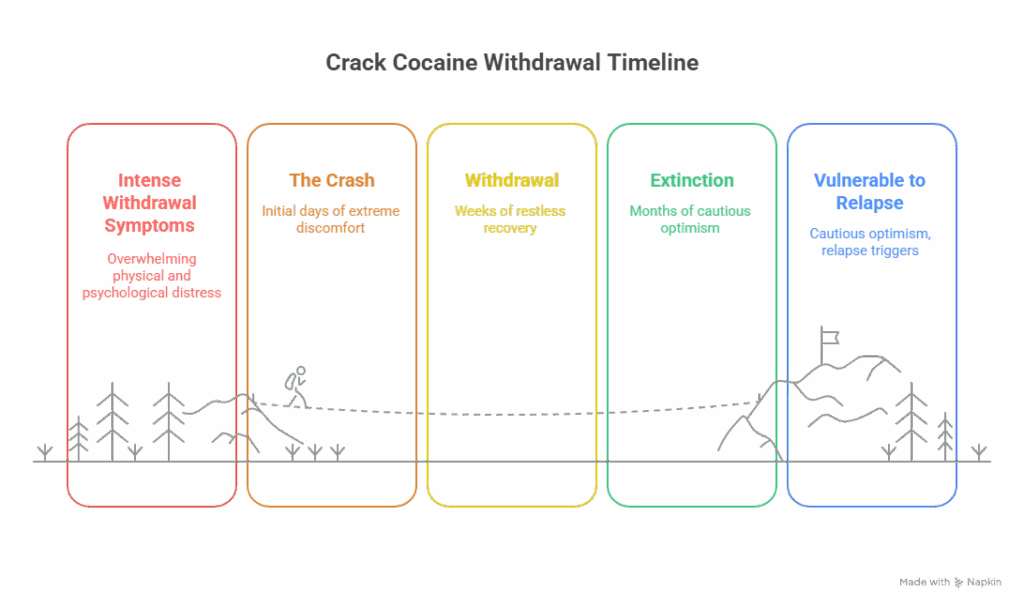
Three significant phases occur during the crack cocaine detox process, each presenting unique challenges. Understanding these phases helps recovering addicts and their loved ones know what to expect and why professional support through crack cocaine detox programs is essential.
Phase 1: The Crash (First 1-3 Days)
The initial withdrawal symptoms can appear anywhere from 30 minutes to 72 hours after the last use of crack. This first phase, often called the “crash,” is characterized by extreme physical and mental exhaustion as the body experiences the immediate absence of the stimulant.
During this initial crash, crack addicts may experience:
- Intense anxiety, agitation, and restlessness
- Profound depression and emotional instability
- Extreme fatigue and need for sleep (sometimes 12-18 hours daily)
- Increased appetite after extended periods of appetite suppression
- Strong drug cravings as the body adjusts to the sudden lack of dopamine
- Paranoia and heightened suspicion
- Irritability and mood swings
Phase 2: Withdrawal (1-2 Weeks)
After the first few days, recovering crack addicts will notice that their acute anxiety or agitation may not be as severe. However, users are still likely to feel anxious, restless, and profoundly fatigued during this phase. This period is when drug cravings intensify significantly as the brain continues adjusting to chemical changes.
Phase 2 characteristics include:
- Continued but less severe anxiety and restlessness
- Persistent fatigue despite adequate sleep
- Powerful psychological cravings for crack
- Depression that may worsen before improving
- Difficulty experiencing pleasure (anhedonia)
- Sleep disturbances including insomnia and disturbing dreams
- Concentration problems and mental fog
Phase 3: Extinction (Weeks to Months)
The final phase of crack cocaine withdrawal is sometimes called the extinction phase. During this phase, recovering addicts may begin to feel physically better as the body heals. However, psychological cravings can persist for months, and individuals are at significantly higher risk for relapse depending on environmental triggers and social situations.
Crack abuse creates both psychological and physical dependence, making it essential that those in recovery remain vigilant around situations, people, or places that might trigger cravings or encourage relapse. This is precisely why aftercare planning and ongoing support through therapy, support groups, and sober living arrangements are crucial components of long-term recovery.
The Supervised Process of Medical Detox
Medical detox describes a supervised process where recovering addicts receive medical guidance, psychiatric support, and comprehensive care during their detoxification from crack cocaine. Depending on the user’s specific needs, level of addiction, and co-occurring health conditions, crack detox can occur at either an inpatient or outpatient cocaine rehab center.
Currently, there is no FDA-approved medication-assisted treatment protocol specifically for crack cocaine addiction. Unlike opioid or alcohol addiction treatment, no medications can chemically block cravings or prevent relapse from cocaine treatment. This makes the psychological support, therapeutic interventions, and structured environment provided during medical detox absolutely critical to recovery success. [1]
At Golden Road Recovery, our medical detox programs provide:
- 24/7 medical monitoring and support
- Psychiatric evaluation and mental health treatment
- Nutritional support and meal planning
- Sleep regulation assistance
- Individual and group therapy during detox
- Safe, trigger-free environment
- Medication management for co-occurring disorders
- Crisis intervention for severe depression or suicidal ideation
- Comprehensive assessment for appropriate level of continuing care
The support received during medical detox creates the foundation for long-term recovery. By managing withdrawal symptoms, providing emotional support during the most challenging phase, and preventing access to crack cocaine during periods of intense craving, medical detox dramatically improves the likelihood of successfully transitioning to ongoing crack cocaine addiction treatment.
Treatment for Crack Addiction
After detox, seeking additional crack addiction treatment is strongly recommended—and often essential—for long-term crack cocaine recovery. Detox addresses the physical aspects of addiction, but comprehensive rehabilitation tackles the psychological, behavioral, and social dimensions that perpetuate crack cocaine addiction. At Golden Road Recovery, you can choose an individualized treatment plan that meets your specific needs, level of addiction, life circumstances, and recovery goals.
Inpatient Rehab
For many recovering crack addicts, an inpatient rehab center provides the intensive structure and support needed to successfully navigate all phases of detox and early recovery. Residential treatment requires living at the facility for a minimum of 30 days, though 60- to 90-day programs often yield better long-term outcomes for crack cocaine addiction. [1]
During inpatient rehab at Golden Road Recovery, individuals undergo various evidence-based therapy types designed to address the psychological impact of their crack addiction. Our residential programs provide:
- Comprehensive medical and psychiatric care
- Individual therapy sessions 3-5 times weekly
- Group therapy and peer support
- Family therapy and relationship repair
- Trauma-informed care for underlying issues
- Life skills training and relapse prevention education
- Recreational therapy and physical fitness programs
- Nutritional counseling and healthy meal preparation
- 24/7 support and supervision
- Structured daily schedule promoting healthy routines
Recovering crack addicts also receive ongoing medical support, particularly if their crack cocaine addiction has caused health complications like heart problems, respiratory issues, stroke, or other medical concerns. The immersive nature of inpatient treatment removes you from triggering environments and provides intensive focus on healing—both physically and psychologically. This level of care is especially recommended for those with severe addiction, co-occurring mental health disorders, previous unsuccessful treatment attempts, or unstable home environments.
Types of Therapies Used in Crack Rehab
Contingency Management
Contingency management operates on a straightforward principle: positive behaviors receive positive reinforcement. In crack cocaine addiction treatment, this means earning tangible rewards—gift cards, privileges, or vouchers—for negative drug tests and meeting treatment goals. While it might sound simplistic, research demonstrates impressive efficacy. The brain, still learning to experience reward from sources other than crack, responds well to immediate positive feedback. This approach essentially retrains the reward system, creating new neural pathways associated with sober achievements rather than drug use. [2]
Cognitive Behavioral Therapy (CBT)
CBT serves as the workhorse of cocaine treatment, addressing the thought patterns that drive addictive behavior. The therapy operates on the premise that our thoughts influence our feelings, which in turn drive our actions. Through CBT, you learn to identify triggers, challenge irrational thoughts (“I need crack to function”), and develop coping strategies for cravings. This isn’t about willpower—it’s about rewiring how your brain processes stress, boredom, and emotional pain. The skills learned in CBT become your toolkit for navigating life without crack, transforming automatic drug-seeking responses into healthier alternatives. [1]
12-Step Programs for Crack Recovery
Programs like Cocaine Anonymous adapt the time-tested 12-step model specifically for stimulant addiction. These programs offer something clinical treatment cannot: a lifelong community of people who understand crack addiction from lived experience. The spiritual component—acknowledging a higher power and making amends—provides a framework for personal transformation that extends beyond simply not using drugs. For many in crack cocaine rehab, 12-step programs become a permanent part of recovery, offering meetings, sponsorship, and fellowship long after formal treatment ends.
Recovery and Life After Crack Rehab
Your recovery from crack cocaine addiction doesn’t end when you complete residential treatment or finish an outpatient program. In fact, that’s when the real work begins—applying the skills, insights, and coping mechanisms you’ve learned to everyday life while navigating the triggers, stressors, and challenges of the real world. At Golden Road Recovery, we emphasize that successful long-term recovery requires ongoing support, structured transitions, and continued commitment to sobriety.
Sober Living
Sober living facilities, also known as sober houses or halfway houses, act as a critical bridge between the structured environment of rehab and the independence of regular daily life. These residential programs provide a supportive, drug-and-alcohol-free community where recovering addicts can continue practicing recovery skills while gradually reintegrating into society.
Individuals who choose to live in a sober house will share accommodations with other recovering addicts, creating a peer support network of people committed to maintaining sobriety. The structure typically includes:
- Drug and alcohol-free living environment with regular testing
- Shared responsibilities including household chores and maintenance
- Rent payments that teach financial responsibility
- Required meeting attendance such as 12-step programs or therapy sessions
- Employment or educational requirements promoting productivity and purpose
- House rules and curfews providing structure and accountability
- Peer support from others navigating early recovery
- Gradual increase in independence as recovery stabilizes
Sober living is particularly beneficial for those who:
- Completed inpatient treatment but aren’t ready to return to their previous living situation
- Live in environments where substance use is prevalent
- Lack stable housing or supportive family relationships
- Need additional time to develop job skills and financial stability
- Want extended peer support during early recovery
The duration of sober living participation varies based on individual needs, typically ranging from several months to over a year. This transitional period allows recovering crack addicts to strengthen their recovery foundation while navigating real-world responsibilities in a supportive, accountable environment.
Aftercare
Aftercare provides recovering addicts with ongoing support after their primary crack cocaine rehab treatment ends. Research from the National Institute on Drug Abuse (NIDA) demonstrates that continuing care significantly improves long-term recovery outcomes and reduces relapse rates. Notably, studies have found that telephone-based counseling for recovering crack addicts has been highly successful as an aftercare intervention—individuals who participated in phone-based counseling were substantially more likely to avoid relapse and maintain sobriety. [1]
At Golden Road Recovery, we develop comprehensive aftercare plans tailored to each individual’s needs, circumstances, and recovery progress. Additional aftercare programs can include:
- Individual therapy – Ongoing counseling to address challenges, process emotions, and prevent relapse
- Participation in 12-step programs – Cocaine Anonymous, Narcotics Anonymous, or other support groups
- Alumni programs – Connections with former Golden Road Recovery residents for continued community
- Telephone or virtual counseling – Regular check-ins with counselors for accountability and support
- Health and fitness programs – Physical wellness activities supporting overall recovery
- Medication management – Continued psychiatric care for co-occurring mental health disorders
- Family therapy – Ongoing relationship repair and family education
- Vocational training and job placement – Career development supporting financial stability
- Educational support – Assistance pursuing GED, college, or professional certifications
- Relapse prevention planning – Ongoing strategy development for managing triggers and high-risk situations
The most effective aftercare plans are individualized, addressing your specific challenges, triggers, and goals. Whether you need intensive ongoing therapy, periodic check-ins, or primarily peer support through 12-step programs, aftercare ensures you’re never navigating recovery alone. At Golden Road Recovery, our commitment to your success extends far beyond your time in our facility—we remain invested in your long-term recovery journey.
When is it Time to Enter Rehab?
If you’re reading this article, some part of you already recognizes that crack cocaine has taken more than it’s given. Perhaps you’ve tried quitting on your own and discovered the psychological pull is simply too powerful. Maybe you’ve watched your life contract—damaged relationships, deteriorating health, financial devastation, legal troubles—yet felt powerless to change direction. The truth is, there’s rarely a “perfect” moment to enter crack cocaine rehab. There will always be obligations, fears, and justifications for delaying treatment.
Consider entering crack addiction treatment if you:
- Have attempted to quit multiple times without lasting success
- Experience physical or mental health deterioration related to crack use
- Face crumbling relationships with family, friends, or romantic partners
- Encounter legal consequences from drug-related behaviors
- Find yourself using more crack more frequently to achieve the same effects
- Cannot imagine a life without crack cocaine
- Spend most of your time obtaining, using, or recovering from crack
- Neglect work, school, or family responsibilities due to crack use
- Continue using despite awareness of negative consequences
- Experience withdrawal symptoms when attempting to stop
- Have developed health complications related to crack cocaine addiction
Recovery isn’t about waiting until you’ve “hit rock bottom”—it’s about stopping the descent before the bottom destroys you completely. At Golden Road Recovery, we understand that seeking help is terrifying, that you’re admitting vulnerability and stepping into uncertainty. But on the other side of that fear lies a life you may have forgotten is possible—one where mornings don’t begin with cravings, where relationships can heal, where you recognize yourself in the mirror again. That life is waiting for you, and we’re here to help you reclaim it.
Looking for a Recovery Center for Crack Cocaine Addiction?
Getting help for crack cocaine addiction is easier than you might think, and taking that first step could save your life. You don’t need to have everything figured out—you just need to be willing to reach out. At Golden Road Recovery, our compassionate admissions team is available to answer your questions, verify your insurance coverage, and help you understand your treatment options without pressure or judgment.
You can speak with a medical professional or addiction specialist to receive an individualized assessment and crack cocaine addiction treatment plan tailored to your specific needs. We’ll evaluate your level of addiction, co-occurring mental health conditions, medical concerns, and personal circumstances to recommend the most appropriate level of care—whether that’s medical detox, inpatient rehab or partial hospitalization.
Don’t let fear, shame, or uncertainty prevent you from getting the help you deserve. Thousands of people successfully overcome crack cocaine addiction every year, and recovery is absolutely possible for you too. The compassionate professionals at Golden Road Recovery have helped countless individuals break free from crack addiction and rebuild meaningful, fulfilling lives. You can be next.
If you or someone you love is struggling with crack cocaine addiction, Golden Road Recovery is here to help. Call us today to begin your journey to recovery—because you don’t have to walk this road alone, and the life you’re meant to live is waiting on the other side of this decision.
Frequently Asked Questions – FAQs
Crack cocaine addiction treatment typically ranges from 30 to 90 days for inpatient programs, with many benefiting from extended care or transitional living. Outpatient programs can last several months to a year. Recovery is a journey, not a destination—many continue therapy or support groups for years. Duration depends on addiction severity, co-occurring disorders, and individual progress.
Crack’s rapid onset and short duration create a uniquely compulsive pattern of use. The drug floods the brain with dopamine at levels no natural reward can match, fundamentally altering the brain’s chemistry. This neurological hijacking, combined with crack’s affordability and availability, creates powerful addiction. The psychological cravings can persist long after physical withdrawal, making relapse prevention a long-term process requiring professional support.
While crack cocaine detox isn’t typically medically dangerous, attempting it at home significantly reduces success rates. The psychological symptoms—severe depression, anxiety, and overwhelming cravings—often prove too intense to manage alone. Professional crack detox provides medical monitoring, psychiatric support, nutritional care, and a trigger-free environment. The emotional support and structured setting dramatically improve outcomes and reduce relapse risk.
Most insurance plans provide some level of coverage for substance abuse treatment, though the extent varies by provider and policy. The Affordable Care Act requires coverage for mental health and substance abuse treatment as essential health benefits. Many quality cocaine rehab centers employ insurance specialists who verify benefits and maximize coverage. Don’t let financial concerns prevent you from seeking help—many facilities offer payment plans, sliding scale fees, or financial assistance.
Completing rehab is a significant milestone, but recovery continues long after discharge. Effective aftercare planning includes outpatient therapy, support group attendance, sober living arrangements, and ongoing medical monitoring. Many programs offer alumni groups providing continued community support. Developing a strong support network, maintaining healthy routines, and addressing underlying mental health conditions are crucial for long-term success. Recovery is a lifestyle change, not a one-time event.
Sources
[1] National Institute on Drug Abuse. (2024). Cocaine Research Report. National Institutes of Health. – https://nida.nih.gov/research-topics/cocaine
[2] U.S. Department of Justice, National Drug Intelligence Center. (2003). Crack Cocaine Fast Facts. – https://www.justice.gov/archive/ndic/pubs3/3978/index.htm
[3] Alabama Department of Mental Health. (2019). Crack and Cocaine: Public Health Information Bulletin. – https://mh.alabama.gov/wp-content/uploads/2019/03/CrackAndCocaine.pdf
[4] U.S. Government Accountability Office. (1991). Drug Abuse: The Crack Cocaine Epidemic – Health Consequences and Treatment. – https://www.gao.gov/assets/hrd-91-55fs.pdf
[5] MedlinePlus Medical Encyclopedia. (2024). Cocaine Withdrawal. U.S. National Library of Medicine. – https://medlineplus.gov/ency/article/000947.htm